Planning for a life event

Planning for a family member with special needs

Planning for a family member with special needs differs from ordinary planning in one decisive way: it has to work after you are gone, and the obvious ways of providing for someone — leaving them money, giving them money — can remove the public benefits they depend on.

The second question

“What happens to them when we are no longer here to manage it?”

Her framing, and the shape of every one of these pages: the first question is the event itself, and everybody expects it. The second question is the financial one. It arrives days later, and it is almost never anywhere in the plan.

What it does to decisions

The responses this one tends to train

Financial trauma is the lasting effect a distressing event has on how a person handles money. These are the two patterns this particular event produces most often — and naming yours is what makes it workable.

Avoid

Money is the one subject nobody raises.

Most people are afraid to talk about money. In a household, that fear compounds quietly for years — two people each assuming the other has a clearer picture than they do.

Get everything onto one page — every account, every balance, every policy — before forming any opinion about it. One page, no judgment, no plan yet.

Over-control

No amount saved is ever enough.

Every dollar tracked, nothing spent, and a persistent sense that the floor could still give way. It looks like discipline from outside and feels like vigilance from inside.

Write down the number that would mean “enough”, and the date it would need to arrive. If you cannot name one, that is the finding — and it is the thing worth planning around.

What a plan has to deal with

The pieces this event puts in play

General planning considerations, not advice about your situation. Which of them matter, and in what order, is exactly what the first conversation is for.
01

Good intentions can disqualify

Means-tested benefits have asset and income limits. A direct inheritance, or a well-meant gift from a grandparent, can end eligibility. This is the central technical problem and it has established solutions.

02

Structures that hold assets without owning them

Specific trust arrangements and dedicated account types exist to let money be available for someone without counting as theirs. Which is appropriate depends on the situation and on the state.

03

Tell the whole family

A single unaware relative naming the person directly in a will can undo the entire structure. The plan only works if everyone who might leave them something knows about it.

04

Decision-making at eighteen

Legal authority changes when a child becomes an adult, regardless of capacity. Guardianship, or the lighter alternatives to it, needs deciding before that date rather than after.

05

A letter of intent

Not a legal document — a written account of routines, preferences, medical history and what a good day looks like. It is often the most valuable single item in the whole plan.

06

Successor caregivers, named

Plans of this kind are frequently built around one parent’s continued involvement. Naming who takes over, and funding it, is the part that makes it durable.

Supporting photography. Nothing on this page is a client, a case or an outcome.

How working together works

The same published process, applied to this

There is no special program for any one life event. There is one engagement, and its first stage is designed to find out which of these actually apply to you.
  1. Step 1

    Initial Planning Engagement

    60–90 days

    Goal clarification · Income and benefits review · Cash flow analysis · Monthly savings targets

  2. Step 2

    Ongoing Financial Planning & Advice

    Continuing

    At least 2 planning meetings per year · 4–6 points of communication per year · Ongoing coordination of taxes and investments · Plan revisions as your life changes

  3. Step 3

    Investment Management

    Optional

    Third-party portfolio management · Coordinated with your written plan · Available alongside either step above

Her published work on this

Where she has written or spoken about it

Why this page exists

Every page in this set is anchored to something documented rather than to a keyword worth ranking for. This one is anchored to:

Anchor

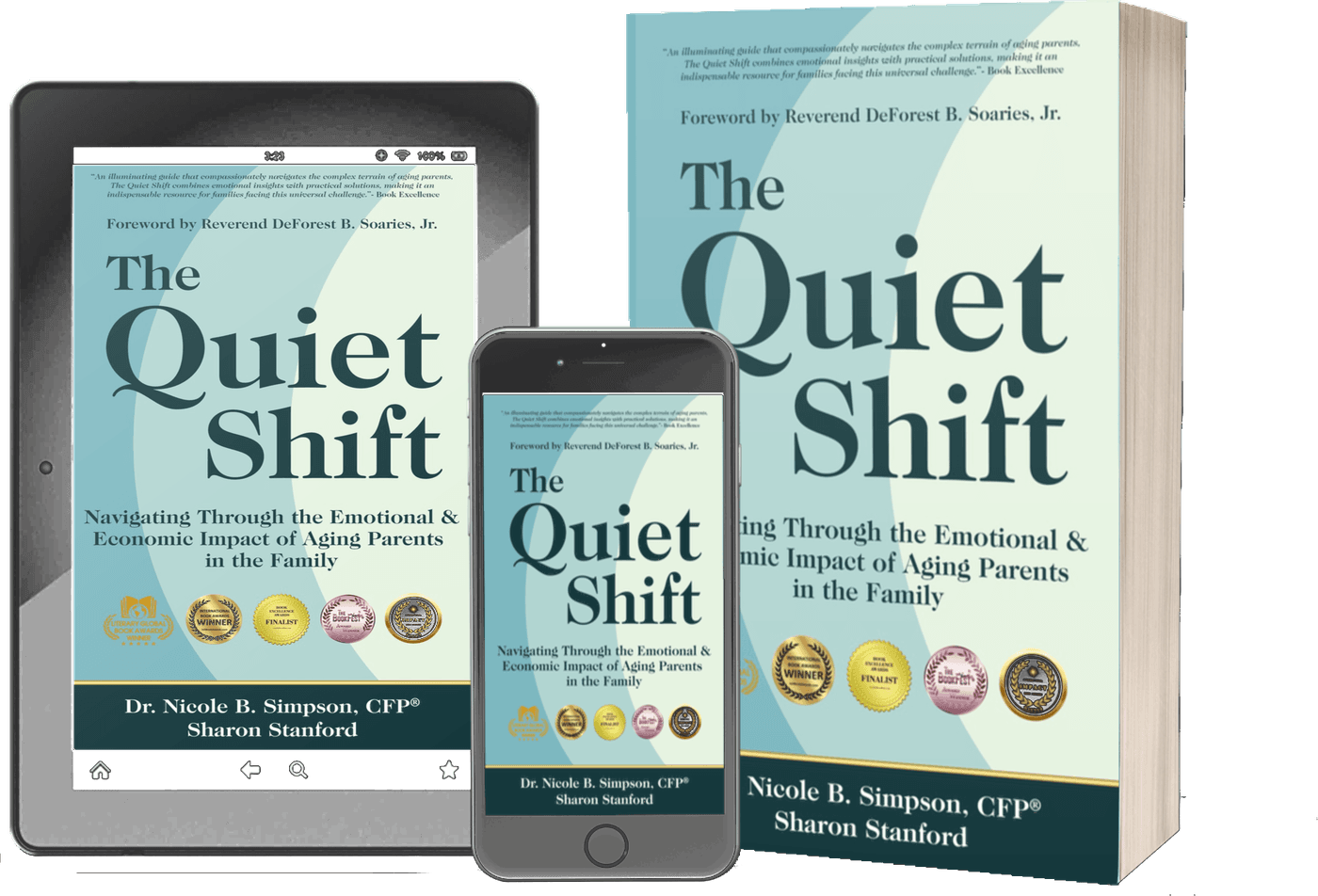
The Quiet Shift covers long-term care, special needs and aging parents — see its entry in content.ts.

I am credentialed, I’m credible, and I’m called.

Bring the situation, not the spreadsheets

The first conversation is free, lasts an hour, and starts with where you want to go rather than with what happened to you.